A digital twin has been developed for Hanover's urban drainage system, which covers the areas of urban surfaces, the sewer network, sewage treatment plants and water bodies. The purpose of the digital twin is to represent the entire system in real time in order to better manage the effects of extreme water events.
Using the city of Hanover as an example, a digital twin was created which, based on real-time measurement data and simulation models, reflects the current status of an urban drainage infrastructure with its various sub-areas. By incorporating forecasts of the most important influencing factors, such as precipitation and runoff data, a forward-looking scenario analysis is made possible as a basis for proactively managing extreme precipitation events. The digital twin also provides the urban drainage operating staff with recommendations on how to deal with heavy rainfall events, for example to reduce flooding damage in the urban area and combined sewer overflows into water bodies.
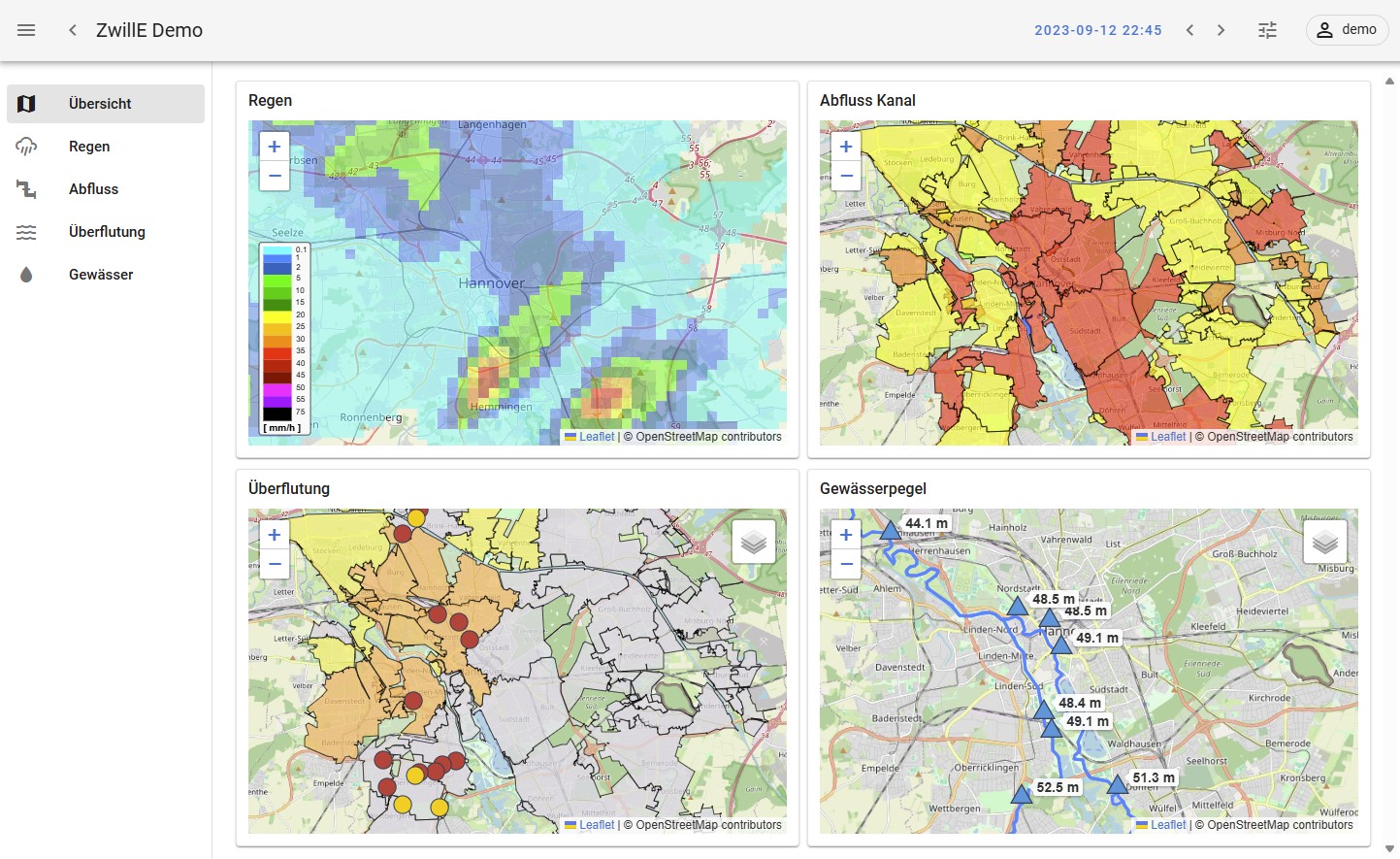
By employing a map-based visualization, the developed digital twin shows the operating staff the current and expected regional precipitation situation in the urban area. On the other hand, the technical operations staff in the control rooms are shown the effects resulting from the current and expected precipitation in the various sections of the drainage system: a) the current as well as the expected load situation in the sewer network including the inlet pumping stations and wastewater treatment plants, b) the surface flooding in the urban sub-catchment areas resulting from current and forecast precipitation, including current and potential critical areas, and c) the hydraulic and material properties (quantity and quality) of the Leine and Ihme rivers, including their influence from rainwater discharges and combined sewer overflows resulting from the respective precipitation event. Finally, the system offers those responsible in the city suggestions for measures to manage the acute precipitation event as well as for proactive preparation for the impending event. In critical areas at risk of flooding the proposed measures include for exampleclosure of underpasses and roads, warning notices or displays, evacuation of endangered properties and securing them with local protective measures,e.g.,temporary barriers. One preparatory measure is, for example, the anticipatory venting of pumps).
When developing the digital twin, care was taken to ensure a high degree of openness and transferability of the approach to other cities and municipalities. This means that the approach can also be transferred to other use cases outside the pilot area of Hanover with a moderate need for adaptation (to take alternative urban conditions into account). It is particularly important to clarify organizational and legal issues and requirements for critical infrastructures (KRITIS) at an early stage regarding the city-internal provision of the necessary meteorological and hydrological model and measurement data as well as the existing infrastructure data of the drainage system.