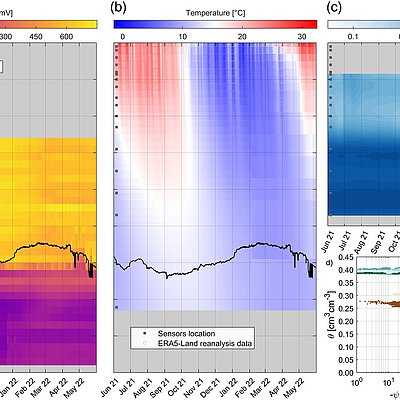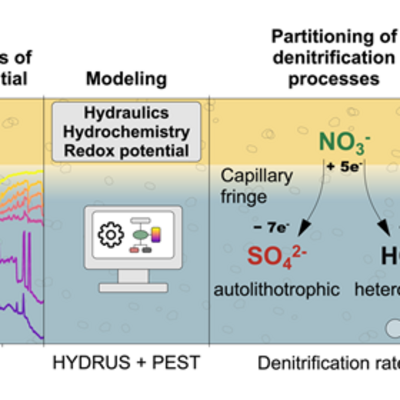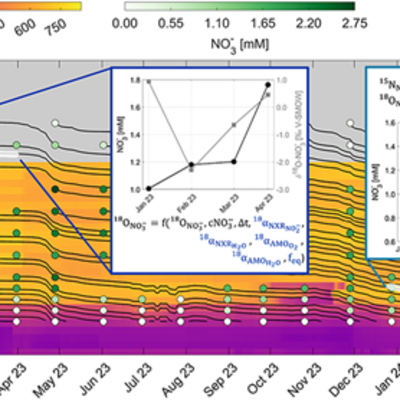
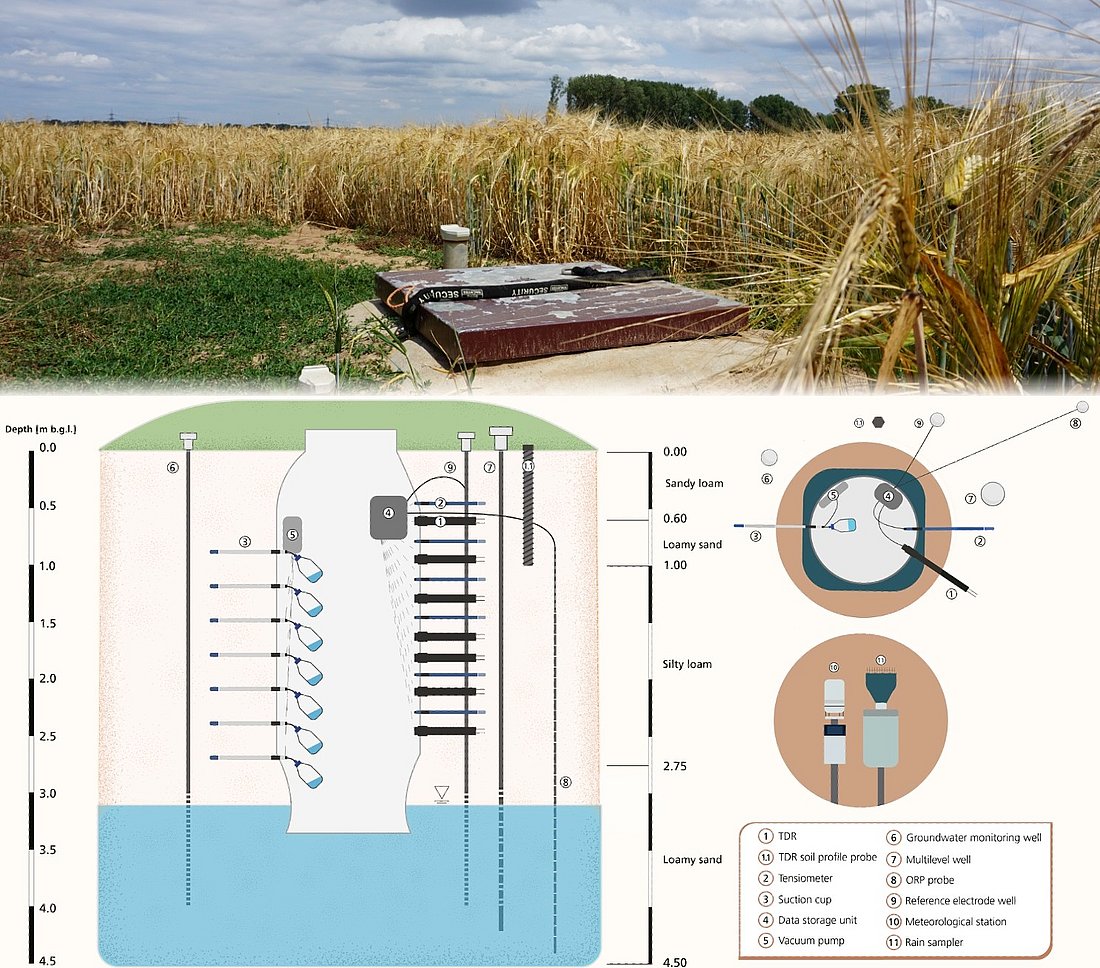
The soil monitoring station developed enables high-resolution in-situ measurement of water and solute fluxes as well as hydrochemical processes in soil and shallow groundwater. By combining commercial sensors with custom-developed components, it provides a basis for accurately assessing, in real time, the transformation processes of reactive nitrogen species and the input of substances in agricultural systems.
The soil monitoring station presented here represents an innovative approach to high-resolution monitoring of water and solute transport processes in agricultural soils. The system is designed to continuously record hydrochemical processes, such as the transformation of reactive nitrogen species, directly on-site (in situ) and across various depth ranges. In doing so, the station fills a key gap in existing monitoring approaches, which often provide only sporadic or time-delayed concentration measurements in groundwater and surface water. Especially when it comes to nitrate, such traditional methods are often insufficient to reliably track the actual processes in the soil or to evaluate the effectiveness of mitigation measures.
The innovative nature of the monitoring station lies particularly in the integrated linking of hydraulic and hydrogeochemical parameters. Among other things, it records soil moisture, matrix potential, groundwater levels, as well as redox potentials and the chemical compositions of pore water and groundwater. By combining commercially available sensors with specially developed components, a system was created that is both flexibly adaptable and robust for long-term use under real field conditions. The high temporal and spatial resolution makes it possible to visualize dynamic changes in the soil profile and analyze biogeochemical processes in much greater detail than with conventional monitoring methods.
Particularly relevant for practical applications is the station’s ability to directly observe processes. This allows for a significantly better understanding and quantification of transformations and contaminant inputs. In addition to nitrate, coupled processes, such as uranium or selenium mobilization at redox boundaries, can also be identified. Continuous data collection thus creates a robust foundation for water management assessments, the protection of groundwater resources, and the optimization of agricultural management practices.
The developed monitoring station therefore has high application potential for agriculture, water management, and environmental monitoring. It can be used to evaluate fertilization and irrigation strategies, to assess the effectiveness of water protection measures, or for the scientific analysis of material cycles. Thanks to its modular design and the use of available sensor technology, it can also be adapted to different locations and research questions. The monitoring station thus represents an important step toward data-driven, process-oriented soil and groundwater management.