The recommended course of action demonstrates how a model-based-risk assessment can be used to identify sources of contamination and determine relevant biochemical
processes. This enables the development of action strategies for
groundwater management that take into account current and future
conflicts of interest.
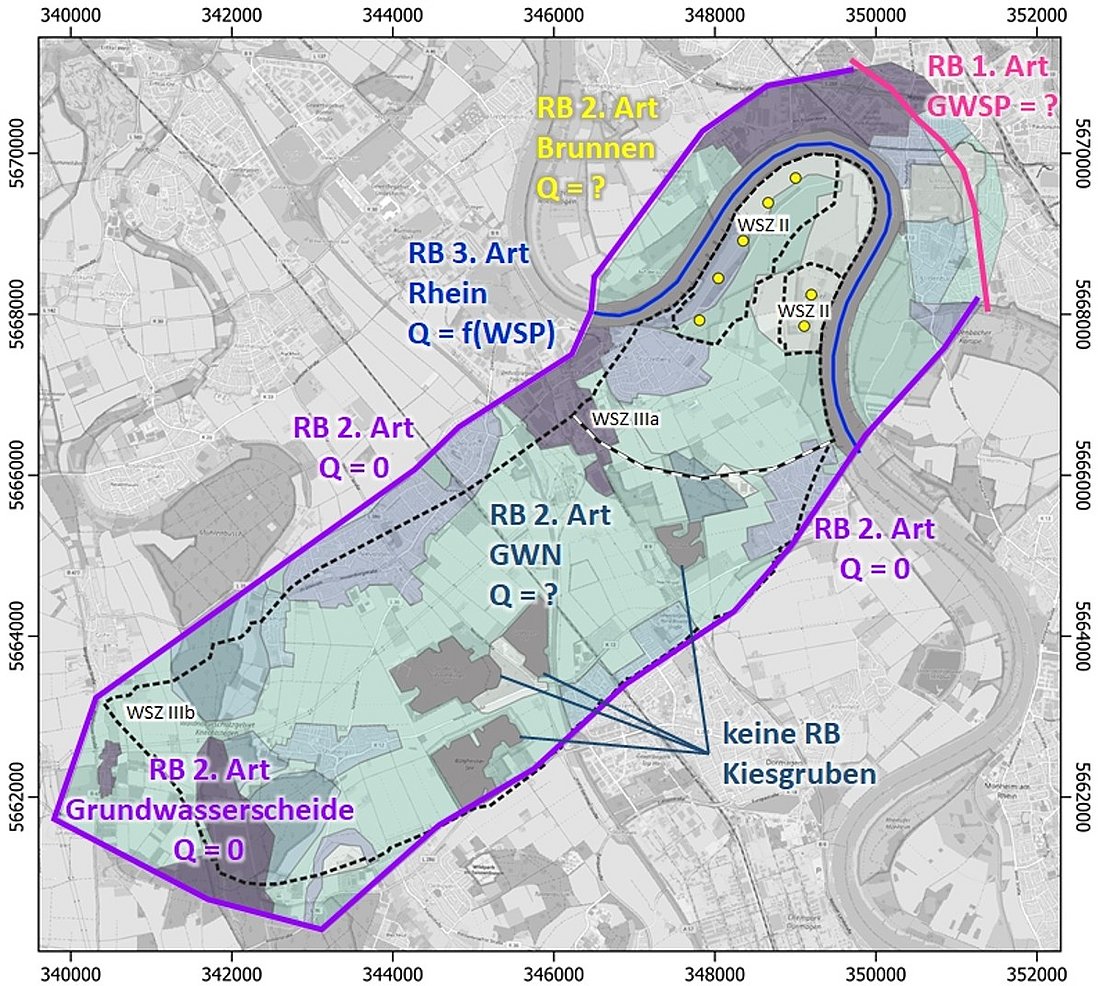
The recommendation presents a methodology for risk assessment in drinking water catchment areas. The methodology is based on a groundwater flow model that is used to describe the hydraulic conditions at the site under investigation in both space and time (site characterization). In this methodology, contaminants are grouped according to their hydrogeochemical and geochemical behaviors to enable a comprehensive investigation and quantification of system responses. Typical/probable damage scenarios are selected.
Transport processes are calculated along representative flow paths with the aim of reducing the computational load. The temporal evolution of the resulting mixed concentrations at the protected resources (in this case, water bodies) is determined. The various retention processes (degradation, sorption) are superimposed. A novel aspect of the developed approach is that it does not evaluate the interactions of individual specific substances with the environment of the water intake facility, but rather groups of substances with specific properties. This allows the effects of individual processes on the catchment facilities to be determined in the form of scenarios, independent of a specific incident or problematic substance, and enables proactive control measures to be derived or risk mitigation and preventive measures to be planned. This results in recommendations for action in the event of specific contamination.
Consequently, changes in treatment requirements and the associated operating costs can be estimated.
The methodology developed in the project, as well as the derived general measures, can be applied to other sites as a planning and forecasting tool.

