The project developed, based on a natural landscape analysis of nitrate processing in groundwater, an active, minimally invasive stimulation of existing ecosystem services and offers the possibility of socially and economically relevant use of the technology directly after the project.
The changes in the water cycle caused by climate change also affects water availability. In the future, this will lead to shortages in water supply. Groundwater is the main drinking water source in almost all European countries. However, it often has high nitrate levels and can usually only be brought back into a sustainable water supply through appropriate remediation or treatment technologiess. The self-cleaning potential against pollutants like nitrate is often limited due to the lack of microbially available electron donors in the groundwater, so even with legal reductions of nitrogen input from agriculture, elevated nitrate concentrations can still be expected in groundwater layers for decades.
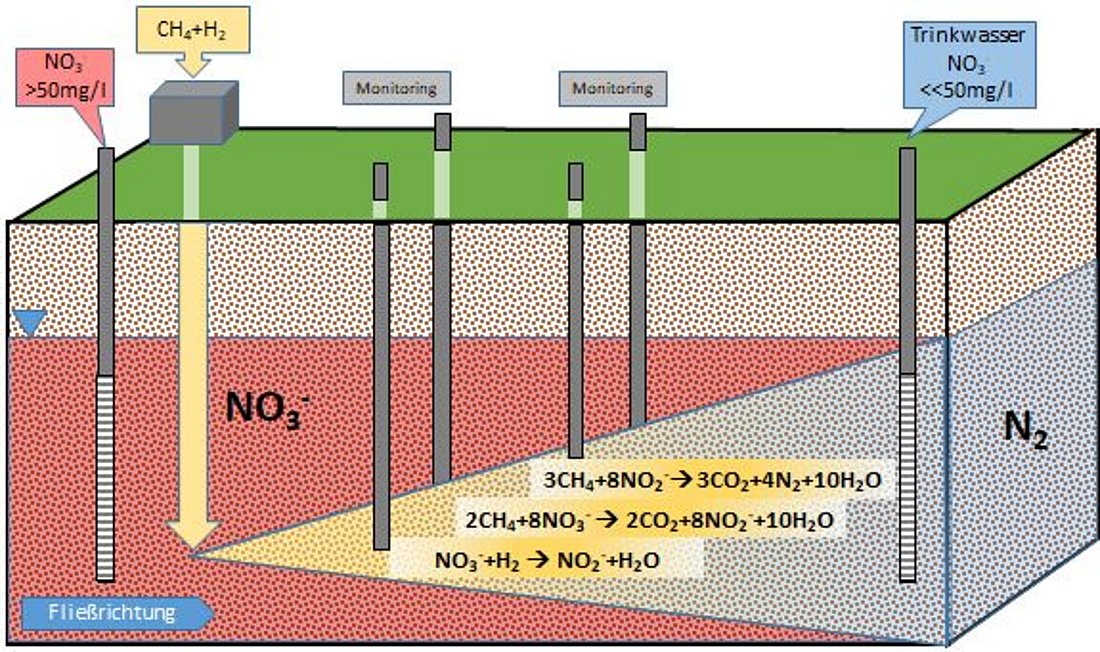
The stimulation of denitrifying microorganisms through the addition of hydrogen (H2) and methane (CH4) initially showed a significant reduction of nitrate in groundwater under laboratory conditions and in an artificial groundwater system (flume experiment) and could significantly reduce nitrate concentrations in a variety of polluted drinking and unused water wells. Compared to existing methods, the groundwater ecosystem itself is restored even with a possible increase in flow rates. Experiments under in-situ conditions are still ongoing.
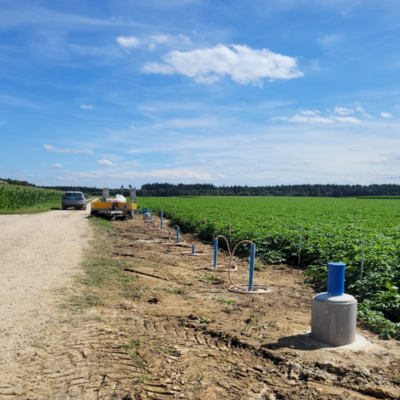
The proposed project developed and optimized the efficient introduction of H2 and CH4 gases into porous nitrate-contaminated aquifers and recorded the degradation potential against dissolved nitrate in the groundwater. The project thus developed, based on a spatial analysis of nitrate processing in groundwater, a potential active, minimally invasive stimulation of existing ecosystem services and provides the opportunity for societal relevant use.